

Introduction
Once you’ve completed your Type Rating, the next big step in your journey to becoming an airline-ready pilot is MCC training. Short for Multi-Crew Cooperation, this specialized course bridges the gap between flying solo and working effectively as part of a cockpit team.
For many aspiring airline pilots in India, MCC is often a misunderstood requirement—but it’s one of the most crucial steps in building confidence and competence before airline assessments.
What Is MCC Training?
- Multi-Crew Cooperation (MCC) training is a structured course designed to teach pilots how to operate effectively in a multi-crew environment.
- Focuses on communication, teamwork, decision-making, and leadership rather than pure stick-and-rudder flying.
- Typically conducted in full-flight simulators of airline-type aircraft.
- It’s a mandatory requirement before undertaking a Type Rating on a two-pilot aircraft—especially in regions governed by EASA or ICAO regulations
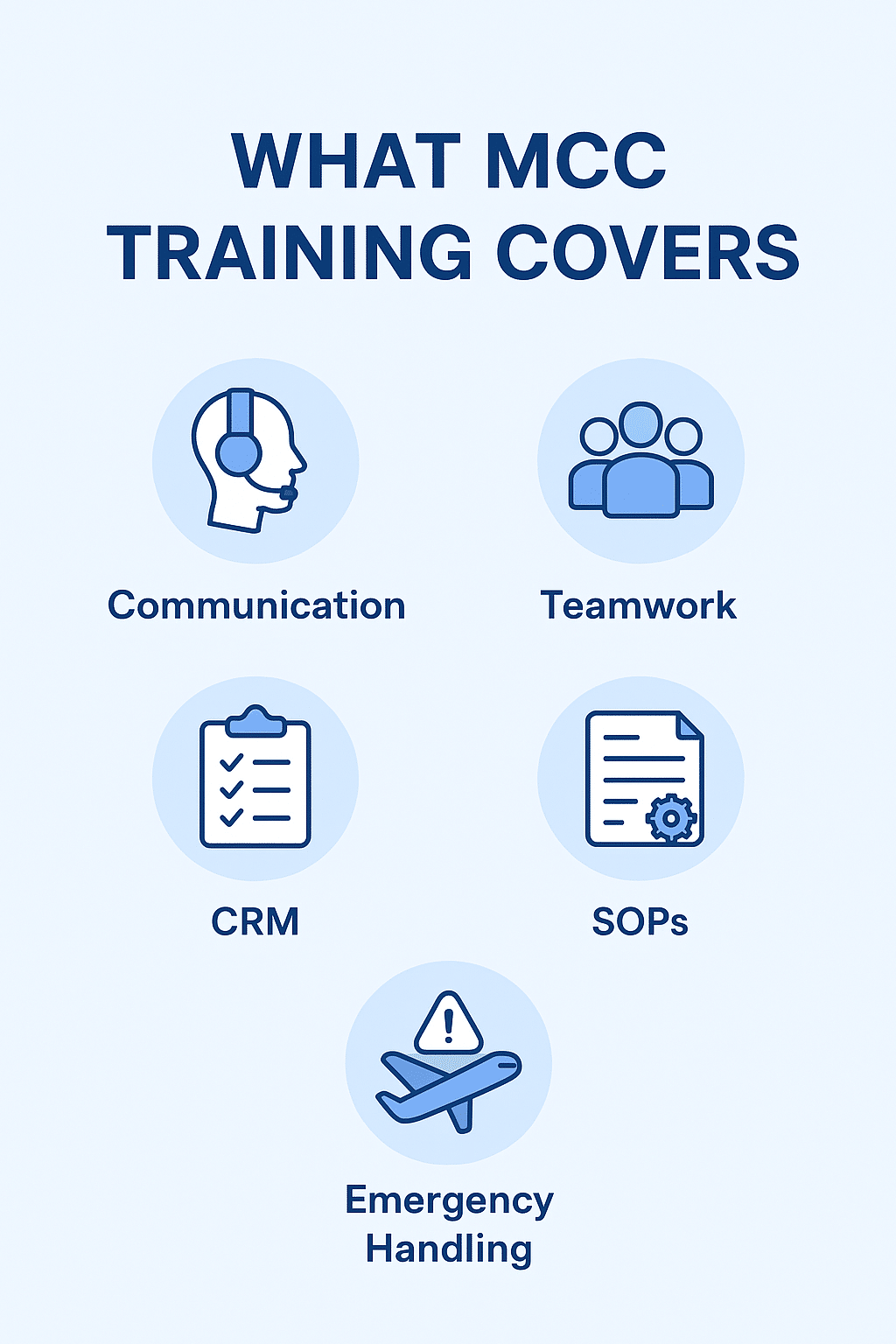
Core Skills Taught in MCC:
- Crew Resource Management (CRM)
- Division of responsibilities (Pilot Flying vs. Pilot Monitoring)
- Standard Operating Procedures (SOPs)
- Handling abnormal and emergency situations as a team
- Situational awareness and workload management
Why Is MCC Training Important After Type Rating?
Even after completing your Type Rating, you may not be fully ready for an airline cockpit. Airlines expect candidates to show airline job readiness, which MCC directly supports.
Key Benefits of MCC Training:
- Foundation for Airline Operations: MCC bridges the gap between flying solo and flying as part of a team, emphasizing teamwork, communication, and cockpit workflow.
- Mandatory Regulatory Step: DGCA and global authorities require MCC before issuing ATPL or MPL, or before enrolling in airline Type Rating training in multi-crew environments.
- Human Factors in Practice: Pilots learn CRM (Crew Resource Management), task allocation, situational awareness, SOP usage, briefings, decision-making, and emergency coordination—core skills validated under MCC training.
- Enhanced Job Readiness: Completing MCC boosts employability. Many airlines consider it a prime differentiator during hiring and interviews.
MCC Training in India
- In India, MCC courses are regulated by the DGCA and conducted at approved training organizations.
- Many candidates pursue MCC immediately after Type Rating to remain current and ready for airline interviews.
- Duration: Usually 2–4 weeks.
- Prerequisite: Valid CPL and completed Type Rating.
Typical MCC Course Structure
A typical MCC course combines both ground theory and simulator-based practical training:
- Theory (Ground): Focuses on CRM, decision-making, workload sharing, communication skills, ATC, SOPs, and threat management.
- Practical (Simulator): Pilots alternate roles between Pilot Flying (PF) and Pilot Monitoring (PM) in realistic cockpit scenarios such as normal flight, abnormal situations, and emergencies
How MCC Boosts Your Airline Career Prospects
Airlines worldwide, including in India, treat MCC as a non-negotiable prerequisite for hiring. Without it, candidates are unlikely to pass airline simulator assessments.
MCC Helps Pilots with
- Smooth Transition: Helps pilots adapt from single-pilot operations to the multi-crew environment.
- Preparation for Real-World Demands: Trains for both routine and high-stress cockpit dynamics—making in-airline transitions smoother.
- Enhanced Interview Performance: Pilots demonstrate advanced CRM skills and readiness to handle airline protocols during job assessments.
How Marigold Aviation Prepares Students
At Marigold Aviation, we ensure our cadets:
- Understand MCC concepts during their training journey
- Are guided on when and where to take MCC after Type Rating
- Have access to resources and mentorship for airline assessments
Conclusion
MCC training is the bridge between your Type Rating and your airline cockpit career. It’s not just about technical flying but about developing the soft skills and teamwork mindset airlines demand. For Indian pilot aspirants, MCC is an indispensable step on the road to securing your first airline job.


